


Blog Detail
Is My Newborn’s Fever an Emergency? A Guide for Indian Parents on When to Worry and When to See a Doctor
That first warm forehead always catches parents off guard. You touch your baby, feel the heat on their skin, and your heart starts to race. “Is this normal? Is my baby okay?” Those questions play on repeat until you reach your doctor.
It’s an instinct — to panic at the first sign of fever in a newborn. And truthfully, it’s not misplaced. A fever in the first few months of life is not something to ignore. But it’s also not a reason to lose calm. Understanding what’s normal and what’s not helps you act quickly and correctly.
At The Kanchi Kamakoti CHILDS Trust Hospital (KKCTH), pediatricians often see anxious parents rushing in with newborns who feel slightly warm. More often than not, the cause is simple and harmless — a bit of over-swaddling, a warm room, or mild dehydration. But once in a while, a fever can mean something more serious. The key lies in knowing the difference.
What Counts as a Fever in a Newborn
A temperature of 100.4°F (38°C) or above is considered a fever in babies less than three months old. For older infants, a mild temperature may not be alarming — but in newborns, even a small rise needs attention. That’s because their immune system is still developing, and infections can spread faster in those first few weeks of life.
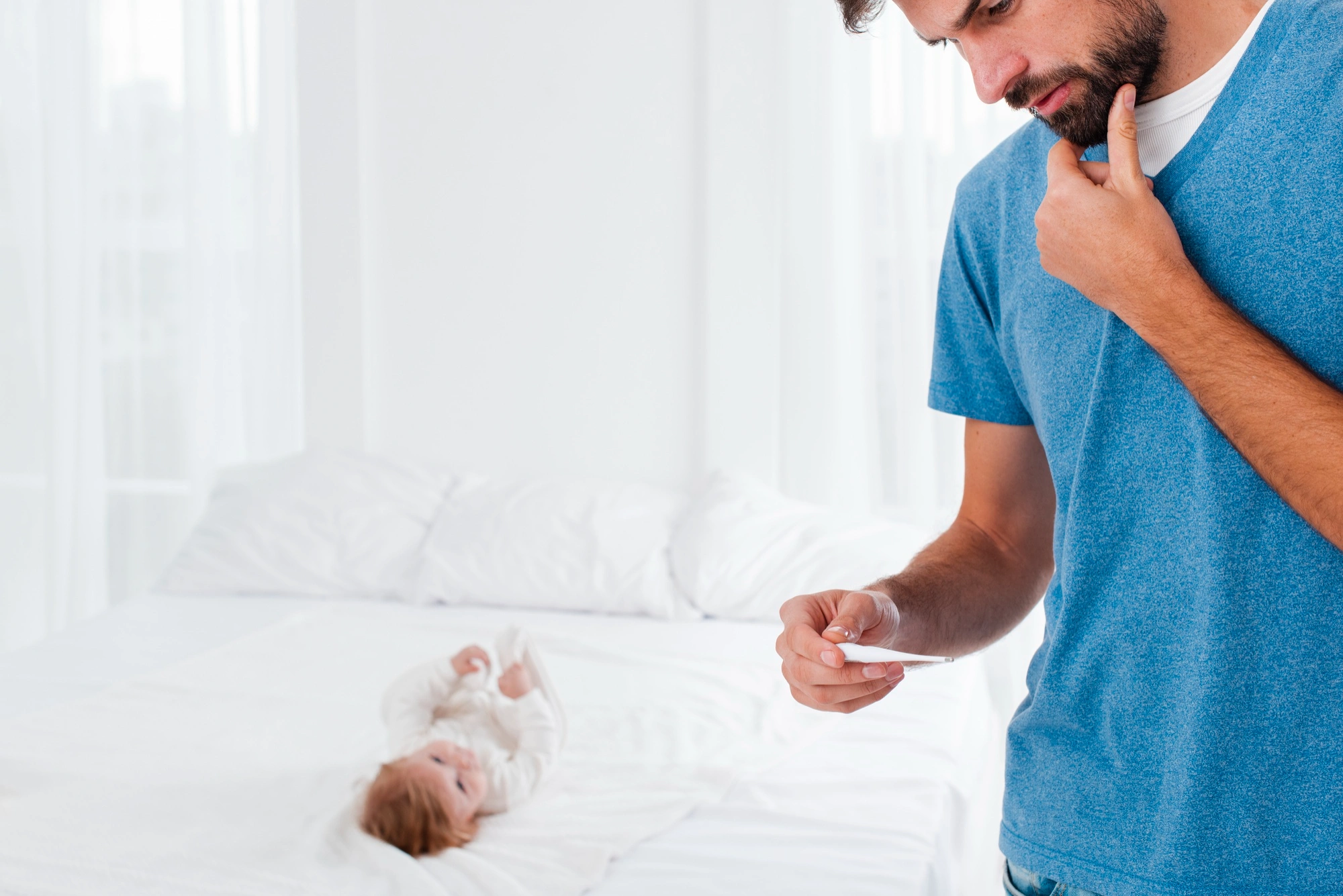
If your baby feels warm, check with a digital thermometer under the arm. Avoid guessing by touch. Babies’ skin can feel warmer after crying or feeding, but their core temperature may be normal.
Why Newborns Develop Fever
The causes can range from harmless to serious. Sometimes, it’s as simple as extra clothing or a closed, humid room. Overheating can raise the temperature slightly, which settles once the baby cools down.
But true fever — persistent warmth with irritability, reduced feeding, or lethargy — often points to infection. In newborns, that could mean a urinary tract infection, a viral cold, or, in some cases, sepsis (a bloodstream infection). There’s no way to confirm the cause at home — which is why doctors always insist on an evaluation for babies younger than three months.
When to Call Your Doctor Immediately
You should reach your pediatrician right away if:
- Your baby is less than 3 months old and has a temperature of 100.4°F or higher.
- The baby is unusually drowsy, limp, or difficult to wake.
- Feeding becomes a struggle, or the baby refuses feeds completely.
- Breathing looks faster or harder than usual.
- The baby is crying continuously or looks pale, blue, or clammy.
At KKCTH, pediatricians treat every newborn fever as a priority. A few simple blood or urine tests often reveal whether the fever is minor or needs closer care. The idea is not to wait and see — early medical attention keeps the baby safe.
What Parents Can Do at Home (While You Wait for Care)
If you suspect fever, dress your baby in light cotton clothes and keep the room comfortable — not cold, not warm. Offer frequent breastfeeds. Breast milk is not only nourishing but also helps keep your baby hydrated and protected.
Avoid over-the-counter medicines. Many parents reach for paracetamol drops, but newborns need very precise doses based on weight and age. Giving medication without a doctor’s advice can do more harm than good.
A lukewarm sponge bath may help lower body temperature, but only if advised by your pediatrician. The goal is not to treat at home — it’s to keep the baby comfortable until medical help is reached.
Fever After Vaccination — When It’s Normal
A mild fever within 24 hours after routine immunization is common and not a cause for panic. It usually settles on its own with rest and frequent feeding. But if the fever lasts beyond a day or the baby becomes excessively irritable, it’s worth a quick check with your doctor.
What Doctors Usually Check
When you visit a pediatrician for a newborn fever, they will check temperature, feeding pattern, breathing, and hydration. Depending on the symptoms, simple investigations like blood tests, urine examination, or sometimes a chest X-ray help identify the cause. Treatment varies — it may be as simple as hydration and monitoring, or a short hospital stay if infection is suspected.
At KKCTH, the pediatric and neonatal teams work closely together so that babies showing early signs of infection are assessed immediately. The focus is always on quick diagnosis, safe management, and parental reassurance.
Conclusion
Every new parent goes through at least one “fever scare.” It doesn’t make you overcautious; it makes you responsible. Babies can’t tell us what hurts — fever is often their only signal.
If something doesn’t feel right — if your baby seems off, too quiet, too sleepy, or feeding less — trust that instinct and call your doctor. It’s always better to check once too many than once too late.
At KKCTH, we remind every parent: calm observation saves time, but quick action saves lives. Most newborn fevers turn out to be minor, and with the right care, babies bounce back beautifully.
