


PEDIATRIC ANESTHESIOLOGY

Safe Pediatric Anesthesiology Care in Chennai
Administering Anaesthetics to babies and small children is not the same as anaesthetizing adults. Unlike in adults most procedures require a general anaesthetic where the child is asleep. The Pediatric Anaesthesia team at KKCTH provide exceptional patient care, comparable to any other Anaesthesia facility available for children’s surgery around the world.Special training, techniques, vigilance, equipment and approach are required for the care of these delicate ones and we have it all!
Advanced Pediatric Anaesthesia with Child-Specific Facilities
Our Operating rooms are equipped with the most advanced Anaesthesia workstations and monitoring facilities exclusively designed for children’s’ surgery of all age groups. With multi-disciplinary collaboration, dedicated Pediatric Anaesthetists provide safe anaesthesia to assist challenging surgical procedures in children. A specially designed and equipped induction room allows parents to be by the child’s side till he/she goes to sleep (where suitable). The Anaesthetic technique is planned specific to each child prior to the procedure.
Comprehensive Care: From Pre-Anaesthetic Check to Recovery
We take care of children of all ages from new born to teenagers—during surgery. Our goal is to make the hospital experience as pleasant as possible. Our role involves managing -your child’s anxiety before surgery, his or her pain during and after surgery, supporting critical bodily functions during the procedure- to minimize the risks associated with surgery itself.
The Preanesthetic check helps us build a rapport with your child and eases the process of induction of anaesthesia. Pain relief for the procedure is discussed with the parents and is a continuous process which starts during the surgery itself and is continued postoperatively. At the end of the surgery the child is safely recovered in our recovery room under the watchful eye of the nurses and transferred to the ward after complete recovery.
Collaboration with Pediatric Surgeons Across Specialties
Our team works closely with doctors in many other departments. We work with Dental Medicine, Gastroenterology, General surgery, Neurosurgery, Ophthalmology, Oral and Maxillofacial surgery, Orthopedic surgery, Otolaryngology(ENT), Plastic Surgery, Radiology, Urology and other departments. Each year, our team cares for more than 5000 children.
Expert Pediatric Anaesthesiologists for Complex Surgeries
Our anaesthetists are widely travelled, published and visit other children’s hospitals around the world to keep up to date with the latest in the field of Pediatric Anaesthesia. We have forayed into complex surgeries like Airway Surgery, Foetal Interventions, Complex Pediatric Neurosurgery, Oncology, Hepatobiliary Procedures and Advanced Laparoscopic Surgery in the smallest of infants. Our team is ably supported by the Pediatric ICU and Neonatal ICU where these children are housed before they transition to a complete recovery.
Training the Next Generation of Pediatric Anaesthetists
The Department is also a recognized training center for the Fellowship in Pediatric Anaesthesia (1 year course) conducted by the Tamil Nadu Dr. MGR Medical University. Each year we have many anaesthesia trainees rotating in the Operating rooms, other than our 2 fellows all eager to learn Pediatric Anaesthesia from the stalwarts.
Consultants









FAQ
- Paediatric anaesthesiology is a distinct subspecialty concerned with rendering children safe, pain-free, and immobile for surgical or diagnostic procedures, a discipline that demands entirely different training, equipment, and pharmacological knowledge from adult anaesthesia.
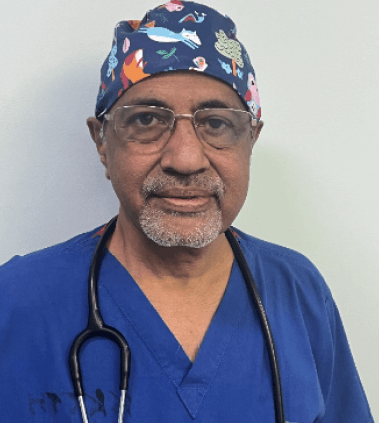
- At KKCTH, the anaesthesiology team is led by Dr. S. Ramesh (MD, Head of Department), Dr. R. Jayanthi (DNB, MNAMS), and Dr. Narendra C. Tajne (DNB, PDCC Paediatric Anaesthesia, MNAMS). The department manages over 5,000 children per year across all surgical subspecialties, including complex airway surgery, fetal interventions, paediatric neurosurgery, oncological resections, hepatobiliary procedures, and advanced laparoscopic surgery in the smallest infants. It is a recognised training centre for the Fellowship in Paediatric Anaesthesia (Tamil Nadu Dr. MGR Medical University).
- In dedicated hands with appropriate equipment and monitoring, modern paediatric anaesthesia is safe for newborns and even premature infants, though it requires a level of expertise unavailable in general-purpose hospitals.
- Neonatal anaesthesia at KKCTH is supported by purpose-built anaesthesia workstations with paediatric-specific ventilators, size-appropriate monitoring equipment, and temperature management systems critical for small infants. Pre-anaesthetic evaluation includes assessment of gestational age, comorbidities, airway anatomy, and haemodynamic status. The anaesthetic technique—regional, volatile, or total intravenous—is tailored to the individual neonate with input from the surgical and NICU teams.
- Yes. Post-operative pain management is a structured process at KKCTH, beginning intraoperatively and continuing throughout the recovery period under the supervision of the anaesthesia team.
- Pain management modalities include regional anaesthesia techniques (caudal, epidural, peripheral nerve blocks), multimodal analgesia (paracetamol, NSAIDs, opioids titrated by weight and age), and procedural anxiolysis for interventions outside the operating theatre. The dedicated recovery room is staffed by trained nurses who monitor for pain, nausea, and emergence agitation before transfer to the ward. A pre-anaesthetic assessment visit builds rapport with the child and family, and a parent may accompany the child to the induction room where clinically appropriate.
- Yes. Emergency anaesthesia is available 24 hours a day for urgent and life-threatening conditions requiring immediate surgical or endoscopic intervention.
- The anaesthesiology team is on call at all times for emergency cases including airway foreign body removal, ruptured appendix, bowel obstruction, severe trauma, and haemorrhagic emergencies. Rapid sequence induction protocols and difficult airway management equipment are immediately accessible. The team works in close coordination with the PICU for post-operative intensive care in high-acuity emergency surgical cases.
- Anaesthetic drug dosage in children is calculated primarily by weight in kilograms, adjusted for age, organ maturity, and the pharmacokinetic variability inherent to different developmental stages.
- Unlike adults, neonates and infants have immature hepatic enzyme systems, altered protein binding, higher total body water content, and different receptor sensitivities, all of which influence drug distribution, metabolism, and duration of effect. KKCTH's anaesthetists undergo rigorous paediatric-specific training to account for these variables. Each anaesthetic plan is customised during the pre-anaesthetic check, with precise calculation verified prior to every procedure.
- Yes. All children undergoing anaesthesia at KKCTH are monitored with the full complement of standard ASA/AAGBI monitoring throughout the procedure and in the recovery room.
- Monitoring includes continuous ECG, pulse oximetry, non-invasive blood pressure (with paediatric-sized cuffs), end-tidal CO₂ capnography, temperature monitoring, and anaesthetic gas analysis. For higher-risk patients, invasive arterial blood pressure monitoring and central venous access are employed. A trained anaesthetist and dedicated anaesthesia nurse are present at the patient's side throughout the entire procedure.